1. Where Are the Best Locations?
Location is one of the most important factors in a currency exchange business. Potential deployment locations include:
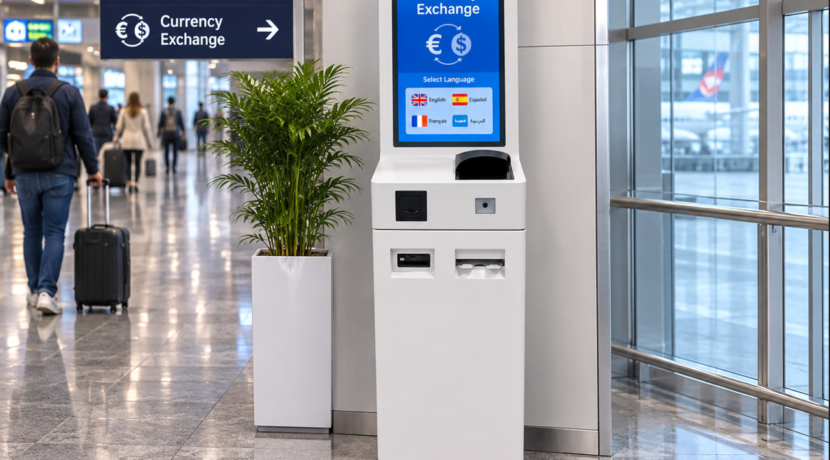
- Airports and transport hubs:Serve international travellers arriving or departing.
- Hotels and resorts:Provide convenient exchange services for overseas guests.
- Shopping centres and tourist districts:Reach visitors who need cash for shopping, dining and transportation.
- Border crossings:Support travellers moving between countries with different currencies.
Before investing, evaluate international visitor numbers, local cash demand, nearby competitors and installation costs.
2. How Does a Currency Exchange Kiosk Generate Revenue?
Currency exchange businesses typically earn revenue through exchange-rate margins, transaction commissions or both.
A self-service currency exchange kiosk allows operators to automate transactions and provide services beyond traditional counter hours. However, transaction volume and the net margin per transaction are more important than the total amount of cash exchanged.
Operators should also manage currency inventory carefully to ensure sufficient banknotes and denominations are available for customer withdrawals.
3. What Costs Should Investors Consider?
The total investment involves more than purchasing the machine. Key expenses include:
- Equipment and software:Kiosk hardware, exchange software and system integration.
- Installation and premises:Site rental, installation and commercial agreements.
- Working capital:Cash reserves in the currencies offered.
- Cash management:Cash replenishment, collection, transportation and insurance.
- Maintenance:Technical support, repairs and software updates.
- Compliance:Applicable licensing, identity verification and anti-money laundering procedures.
Actual costs vary depending on the market, location and business model.
4. Can Automation Improve Profitability?
Automation can reduce the need for staff to handle every transaction and support longer operating hours. It can also provide transaction records and simplify cash management.
However, operators still need to monitor transactions, replenish cash, maintain equipment and handle exceptional situations.
Regulatory compliance is equally important. A passport MRZ scanner can capture passport information, but it does not replace all KYC or AML procedures. Operators must follow the requirements applicable in their country.
5. How to Evaluate Return on Investment
Before purchasing a kiosk, estimate revenue and expenses using realistic local market data.
A simple calculation is:
Monthly Operating Profit = Monthly Transaction Margin − Monthly Operating Expenses
To estimate the break-even transaction volume, divide monthly fixed costs by the average profit contribution from each completed transaction.
Also consider the initial equipment investment, working capital and expected transaction growth. Starting with one location can help validate demand before expanding.
6. Choosing the Right Currency Exchange Kiosk
The equipment should match the target market and expected transaction volume. Important features include:
- Support for required currencies and banknote denominations
- Reliable banknote acceptance and dispensing
- Sufficient cash storage and payout capacity
- Passport MRZ scanning, where required
- Secure cash storage and transaction records
- Multilingual touchscreen interface
- Flexible software integration and remote management
Diversity Kiosk provides customizable foreign currency exchange kiosk solutions with integrated hardware and software options. Configurations can include banknote acceptance, multi-cassette cash dispensing, passport MRZ scanning, cameras and secure cash storage, depending on project requirements.
Conclusion
Is a self-service currency exchange kiosk worth investing in? It can be a valuable business opportunity when there is consistent international traffic, sufficient demand for cash exchange and a sustainable operating model.
The key is to assess the market before choosing the equipment. With the right location, currency configuration and operational planning, a currency exchange kiosk can become a practical addition to an existing foreign exchange business or a new unattended service.
Planning a currency exchange kiosk project? Contact Diversity Kiosk to discuss your target currencies, hardware configuration and software integration requirements.